




 AAPL Solutions Pvt. Ltd.
Gold
AAPL Solutions Pvt. Ltd.
Gold
Untold Stories Behind Ganpati Murtis in Mumbai!
Mumbai’s famous Ganpati idols have unique stories linked to the city’s history and traditions.
Mumbai’s Ganpati festival is famous for huge idols, grand decorations and large crowds. But some of the city’s most famous Ganpati idols have interesting stories that go back decades or even more than a century.
The Keshavji Naik Chawl Ganpati in Girgaon is one of Mumbai’s oldest public Ganpatis. The tradition began in 1893, with a small 2.5-foot idol installed inside a house. As more people joined, the idol was moved to the chawl’s common courtyard. In 1901, Lokmanya Tilak also visited the celebration.
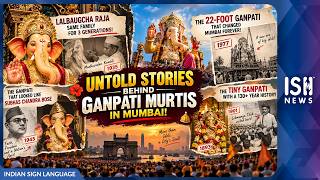
The Lalbaugcha Raja has another unique history. The idol has been made by the Kambli family for three generations. Sculptor Madhusudan Kambli made the idol in 1935, a year after the Lalbaugcha Raja mandal was formed. The idol’s familiar smiling face and royal sitting posture have remained popular for generations.
Mumbai’s tradition of making very large Ganpati idols also has an interesting story. In 1977, during the Golden Jubilee of the Lalbaug Sarvajanik Utsav Mandal, sculptor Dinanath Weling suggested making a 22-foot-tall Ganpati. A special iron trolley was made to transport the huge idol for visarjan. The idol attracted large crowds and encouraged other mandals to make bigger idols.
In 1945, the same mandal in Ganesh Galli created a Ganpati idol inspired by Netaji Subhas Chandra Bose. The idol became very popular and was kept on display for 45 days, much longer than the usual period.
These stories show that Mumbai’s Ganpati festival is not only about size and celebrations, but also about the city’s history, traditions and the people who have kept them alive for generations.