



 AAPL Solutions Pvt. Ltd.
Gold
AAPL Solutions Pvt. Ltd.
Gold
Why Garba Is More Than Just a Dance During Navratri ?
From the lamp at the centre to the clapping and coordinated movements, each element reflects the dance’s cultural and spiritual traditions.
Why Is Garba Always Danced in a Circle? The Meaning Behind the Tradition
It’s Navratri! Have you ever wondered why Garba is traditionally performed in a circle?It may look like a simple dance formation, but the circle has a deeper cultural and spiritual meaning.
The Meaning of the Circle
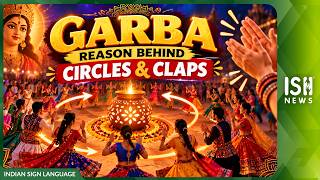
Traditional Garba is often performed around a garbo — an earthen pot with a lamp inside it. The dancers move around this central light.
The word Garba is linked to the Sanskrit word garbha, meaning womb. The pot is often understood as a symbol of the womb, while the lamp inside represents life and divine energy.
The light stays at the centre as the dancers move around it. This is commonly interpreted as a symbol of life revolving around a divine source. The circle has no obvious beginning or end. It can represent the continuous cycle of birth, life, death and rebirth.
Why Is There a Lamp Inside the Pot?
Traditionally, the garbo is an earthen pot with small holes that allow the light to shine through. The light shining through these holes is often interpreted as a symbol of divine energy present within the human body and all of creation.
Garba is closely connected with the worship of Goddess Amba and Shakti. During Navratri, people express their devotion through music, movement and celebration.
Why Does Everyone Dance Together?
Traditional Garba is not just about watching performers on a stage. People gather and dance together in the same circle. Everyone follows the same rhythm and moves around the same centre.
This shared movement has helped Garba remain an important part of community life in Gujarat, bringing people together to celebrate, socialise and express their devotion.
Why Do People Clap During Garba?
Clapping is an important part of traditional Garba. It helps dancers keep the rhythm and coordinate their movements with the music. As the music gets faster, the clapping and footwork often become more energetic.
Some traditional Ayurveda and acupressure practices associate the hands with pressure points believed to influence different bodily functions. However, there is limited scientific evidence that clapping provides specific health benefits through these pressure points. What we can say is that clapping involves repeated movement of the fingers, hands and wrists, while also helping dancers stay in rhythm.
Why Do Garba Dancers Move in Different Directions?
Traditional Garba includes coordinated circular movements, with dancers sometimes moving clockwise and sometimes anti-clockwise, depending on the style and choreography. These movements are part of the dance's traditional form and help create its distinctive rhythm and group patterns.
How Has Garba Changed Over Time?
Garba was traditionally performed in village squares, neighbourhoods and community spaces. It brought people together for devotion and celebration.
Today, Garba is also celebrated at large commercial events featuring stages, famous singers, DJs, elaborate lighting and choreographed performances.
Despite these changes, the circle remains a defining feature of traditional Garba. The dance has travelled far beyond Gujarat and is now performed across India and around the world, especially in communities with Gujarati roots.
Garba is more than a dance. For many, it brings together devotion, culture, movement and community — all around a single centre of light.