




 AAPL Solutions Pvt. Ltd.
Gold
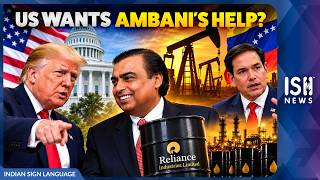
TRUMP NEEDS AMBANI? US TURNS TO INDIA FOR VENEZUELA OIL
The US wants Reliance Industries to refine more Venezuelan oil and explore possible production opportunities in the country. The proposal came into focus during Marco Rubio’s India visit!
US Seeks Reliance’s Help to Refine More Venezuelan Oil
US President Donald Trump has repeatedly threatened tariffs on Indian goods. Now, Washington is looking to Indian billionaire Mukesh Ambani’s Reliance Industries for help expanding the processing of Venezuelan oil. US Secretary of State Marco Rubio said the US wants Reliance to refine more Venezuelan crude at its Indian refineries and potentially explore oil production opportunities in Venezuela.
The proposal came into focus during Rubio’s India visit from 20 to 22 October 2026, when he met Indian officials and visited Reliance Industries’ refinery complex in Jamnagar, Gujarat.
Why Does the US Want Reliance’s Help?
The US wants to increase Venezuelan oil production and expand the market for its crude. Reliance could play a role because it operates one of the world’s largest refining complexes at Jamnagar.
Reliance’s two refineries have a combined capacity of around 1.4 million barrels of crude oil per day. They can process heavy and extra-heavy crude, including Venezuelan oil, which is more difficult to refine than many lighter varieties. Rubio described India as a refining powerhouse and said Washington was discussing ways for Reliance to process more Venezuelan crude.
The discussions could also explore whether Reliance might participate in oil production in Venezuela. However, no final investment agreement has been announced.
Why Is Venezuelan Oil Important?
Venezuela holds some of the world's largest proven oil reserves. However, its oil industry has faced years of underinvestment, infrastructure problems and political and economic difficulties. Heavy Venezuelan crude requires specialised equipment and complex refining processes. Companies with the right technology and infrastructure could help process more of this oil if commercial and regulatory conditions allow.
The US administration is seeking to expand Venezuelan oil production and exports. Reliance’s refining capabilities could make it an important potential partner in this effort.
The US role in Venezuela’s oil sector has also changed amid shifting sanctions and oil policies. The precise arrangements governing production, exports and investment remain important to any future deal.
Reliance Had Earlier Stopped Buying Venezuelan Oil
Reliance previously purchased Venezuelan crude but stopped buying it in early 2025 amid US sanctions and restrictions affecting oil trade. The company later received US authorisation to resume purchases in 2026. This reopened the possibility of bringing Venezuelan crude to its Indian refineries.
The renewed interest comes as India continues to diversify its oil supplies. India imports most of the crude oil it consumes, making access to different suppliers important for energy security. Increasing Venezuelan oil purchases could offer another supply option, although the volume India can import will depend on availability, prices, shipping, refining requirements and applicable US rules.
Marco Rubio Visits Reliance’s Jamnagar Refinery
During his India visit, Rubio met External Affairs Minister S. Jaishankar in Mumbai and discussed bilateral relations, including trade and energy cooperation.
On 21 October, he visited Reliance’s Jamnagar complex in Gujarat, where he met Mukesh Ambani and other company representatives. Reliance said the discussions covered the global energy landscape, commercial partnerships, conventional and new energy, and the growing connection between energy and digital infrastructure, including data centres.
The visit brought attention to the potential for deeper cooperation between Reliance and US companies. However, the company’s public statement did not announce a final agreement to invest in Venezuelan oil production.
India-US Trade Deal: Rubio Says Talks Are Nearly Complete
Rubio’s visit also came as India and the US continued negotiations on a bilateral trade agreement.
In an interview with The Indian Express, Rubio said around 99% of the work on the deal was complete and that the two countries were close to finalising it. He said some wording and language-related issues remained. The agreement has been under discussion amid disagreements over tariffs and trade policy. Rubio said the US was not seeking to punish India through its tariff measures.
The Venezuelan oil discussions and the trade negotiations are separate issues, although both form part of the broader economic relationship between the two countries.
What Did Rubio Say About Pakistan and India’s Internal Affairs?
During his visit, Rubio was also asked about US relations with Pakistan and protests in India concerning the Special Intensive Revision (SIR) of electoral rolls. On relations with Pakistan, he said the US relationship with another country would not come at the expense of India.
When asked about protests concerning SIR, Rubio said protests also take place regularly in the United States and declined to comment on India’s internal political matters, saying these issues should be decided by the Indian people.
His comments came during a visit focused on strengthening economic and strategic ties between Washington and New Delhi.
What Happens Next?
The US proposal could create opportunities for Reliance to process more Venezuelan crude and potentially explore production opportunities in Venezuela.
For India, additional oil supplies could support efforts to diversify imports. For the US, increased production and wider access to refining capacity could help advance its energy objectives. However, the proposal remains at the discussion stage. Any expansion will depend on commercial decisions, regulatory permissions, the availability of Venezuelan crude and the terms of a possible agreement.
For now, the talks highlight the role that India’s refining capacity could play in future energy cooperation between the US, India and Venezuela.