




 AAPL Solutions Pvt. Ltd.
Gold
Meet the Company Turning 21 Tonnes of Temple Flower Waste Into New Products
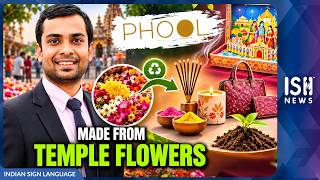
Phool, the Indian company recycling used temple flowers into incense, Fleather and other products while creating employment opportunities for women.
Temple Flowers Were Being Dumped Into Rivers. Now, This Company Turns Them Into Useful Products
Every day, people offer thousands of flowers at temples across India. After prayers, many of these flowers are thrown away. Some are also dumped into rivers, adding to water pollution. But one Indian company is finding a way to give these flowers a second life.
Phool, the company collects used flowers from temples and turns them into products such as incense sticks, cones and other items.
Based in Kanpur, Uttar Pradesh, Phool was founded in 2017 by Ankit Agarwal and Prateek Kumar. The idea grew after Ankit saw used temple flowers being dumped into the Ganga. He began thinking about how these flowers could be reused instead of becoming waste. This led to a process called flowercycling, which means recycling used flowers into new products.
Today, Phool collects flower waste from religious places in Kanpur, Ayodhya, Varanasi, Bodh Gaya and Badrinath. According to the Government of India, the company collects around 21 tonnes of floral waste every week across these locations.
The collected flowers are separated from plastic, threads and other waste. They are then cleaned, dried and processed. The recycled flowers are used to make products such as incense sticks, incense cones and other fragrance products. The company has also explored other uses for the waste, including natural materials and fertiliser.
One of its major innovations is Fleather. It is a material developed using discarded temple flowers and other plant-based waste. Phool designed it as an animal-free alternative to leather. It can be used to develop products such as bags and accessories.
Phool's work also creates employment opportunities for women. They take part in activities such as collecting and sorting flowers, processing the material, making incense sticks and packing products. The company says its workers receive benefits that include fixed salaries, healthcare and other support.
The company is also bringing its flower-recycling idea into festive gifting.
For Diwali, Phool has introduced special gift boxes inspired by Indian art and traditions. One of its gift collections draws inspiration from the Ramayana, while another uses the colours and designs of Kalamkari, a traditional Indian art form. The Kalamkari-inspired box opens into a colourful pop-up display, giving the packaging a second use beyond the festival.
Through flowercycling, Phool is showing how discarded temple flowers can become useful products and create livelihoods. What was once treated as waste is being given another purpose.