


 AAPL Solutions Pvt. Ltd.
Gold
Who Makes Laws and Who Runs the Government? Understand India's Political System
Understand the difference between Lok Sabha and Rajya Sabha, President and Prime Minister, and MLA and MP.
Lok Sabha vs Rajya Sabha, President vs Prime Minister, MLA vs MP: What's the Difference?
India has a democratic system with different elected representatives and constitutional positions. But do you know who makes laws, who runs the government and who represents your constituency? Let's understand three important differences in Indian politics.
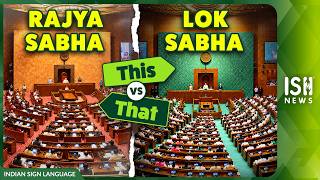
Lok Sabha vs Rajya Sabha:
Lok Sabha and Rajya Sabha are Houses of the Indian Parliament. However, they have different roles and different methods of selecting their members.
Lok Sabha (Lower House)
- Lok Sabha is the Lower House of India's Parliament.
- Its members are called Members of Parliament (MPs).
- People directly elect Lok Sabha MPs through general elections.
- Each MP represents a parliamentary constituency.
- The Lok Sabha plays an important role in making laws and holding the government accountable. Its normal term is five years, unless it is dissolved earlier.
Rajya Sabha (Upper House)
- Rajya Sabha is the Upper House of India's Parliament.
- Its members are also called Members of Parliament (MPs).
- Most members are indirectly elected by elected members of State Legislative Assemblies.
- Members representing certain Union Territories are elected through their respective electoral colleges.
- The President nominates 12 members with special knowledge or practical experience in fields such as art, literature, science and social service.
- Rajya Sabha represents the states and certain Union Territories at the national level. It is a permanent House and cannot be dissolved. Around one-third of its members retire every two years.
Key Difference: Lok Sabha members are directly elected by the people, while most Rajya Sabha members are elected indirectly.
2. President vs Prime Minister: What's the Difference?
Both the President and the Prime Minister have important roles in India's government. However, their responsibilities are different.
President
- The President is the constitutional head of India and the Head of State.
- The President is elected indirectly through an electoral college, not directly by the public.
- The electoral college includes elected members of both Houses of Parliament and elected members of State Legislative Assemblies, including Delhi and Puducherry.
- The President performs constitutional duties according to the Constitution. The President generally acts on the advice of the Prime Minister and the Council of Ministers.
- The President can ask the Council of Ministers to reconsider its advice once. However, the President must follow the advice given after reconsideration.
Prime Minister
- The Prime Minister is the head of the Government of India.
- The Prime Minister leads the Council of Ministers.
- The Prime Minister is appointed by the President.
- The Prime Minister leads the government's work and plays a major role in making policy decisions.
- The Prime Minister and the Council of Ministers are responsible for running the government and implementing its policies. The Council of Ministers is collectively responsible to the Lok Sabha.
Key Difference: The President is the constitutional Head of State, while the Prime Minister leads the government and is responsible for its day-to-day functioning.
3. MLA vs MP: What's the Difference?
MLAs and MPs are both public representatives. However, they work at different levels of government.
MLA (Member of Legislative Assembly)
- An MLA is directly elected by people from a constituency in a State Legislative Assembly.
- MLAs represent their constituencies in the Vidhan Sabha, also called the Legislative Assembly.
- They discuss state-level issues and make laws on matters within the powers of the state legislature.
- They raise local concerns and take part in discussions about the development of their constituencies.
- They also examine the work of the state government.
MP (Member of Parliament)
- An MP represents a parliamentary constituency or a state or eligible Union Territory in India's Parliament, depending on the House.
- Lok Sabha MPs are directly elected by the people.
- Most Rajya Sabha MPs are indirectly elected by elected MLAs.
- Some Rajya Sabha MPs are nominated by the President.
- MPs discuss national issues, make laws on matters within Parliament's powers and examine government policies.
- They also hold the Union Government accountable through parliamentary discussions and other procedures.
Understanding these roles helps us better understand how India's government works
Follow ISH’s THIS vs THAT series to learn more through Indian Sign Language.