


 AAPL Solutions Pvt. Ltd.
Gold
Students defeat Serbia’s powerful leader! A historic political upset
Serbia’s student-backed Student List has won a preliminary parliamentary majority after protests sparked by a deadly railway-station collapse. Aleksandar Vucic was defeated.
Serbia’s Student Movement Wins Election After Two Years of Protests
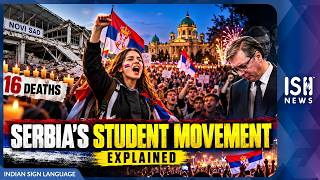
A student-backed movement in Serbia has won a preliminary majority in the country’s parliamentary election after nearly two years of protests against corruption and government accountability. The result is a major setback for Aleksandar Vucic’s political camp, which had dominated Serbian politics for more than a decade.
The Railway Station Disaster That Sparked Protests
On 1 November 2024, a concrete canopy at the railway station in Novi Sad, Serbia, collapsed. Sixteen people eventually died in the disaster. The station had recently undergone renovation. The tragedy raised questions about construction standards, public safety and possible corruption.
Students began protesting, demanding justice for the victims and the release of documents explaining how the collapse happened.
The demonstrations soon spread across the country. Students stopped classes, occupied university buildings and organised marches. Teachers, farmers, workers and other citizens also joined the movement.
Protests Put Pressure on the Government
The growing protests put pressure on Serbia’s government. In January 2025, Prime Minister Milos Vucevic resigned amid the political crisis. However, the student movement continued its protests. Its demands went beyond replacing the prime minister. Protesters called for accountability over the railway disaster, action against corruption and stronger public institutions.
In March 2025, huge crowds gathered in Belgrade, the capital, during one of the largest demonstrations in Serbia’s recent history. The protests continued for nearly two years, turning a demand for justice into a wider movement for political change.
Vucic Resigns as President Ahead of the Election
Aleksandar Vucic had been one of Serbia’s most powerful political figures since 2014, serving first as prime minister and later as president.
On 27 September 2026, he resigned as president ahead of a snap parliamentary election. He said he wanted to take part in the election as an ordinary citizen, and his political camp hoped he could become prime minister if it won. The student movement also decided to contest the election. Rather than simply supporting established opposition parties, it backed a candidate list known as the Student List.
The candidates included professionals such as academics, doctors and other experts. The movement focused on fighting corruption, making public officials accountable and restoring trust in government.
Student List Wins a Parliamentary Majority
Serbia held its snap parliamentary election on 25 October 2026.
Preliminary results announced on 26 October showed the Student List winning 52.71% of the votes counted, giving it 140 seats in the 250-member parliament. The alliance led by Vucic's political camp received 39.17%, corresponding to 104 seats in the preliminary count.
Vucic conceded defeat, and celebrations broke out in Belgrade and other parts of the country. People gathered in the streets, cars honked, crowds chanted, and fireworks lit up the sky. Student Mila Martic told AFP, “I feel incredible. I feel as though I am finally living in a free country.”
The result marked a major turning point for a movement that began with students demanding answers after a deadly accident.
Can the Student Movement Form a New Government?
Winning a parliamentary majority does not automatically mean a new government takes office immediately.
The election results must be finalised, parliament must convene, and the new government must be formally approved. The Student List must also decide who will become prime minister and how its candidates will work together in government.
The movement now faces the challenge of turning its promises into action. Its supporters want progress on corruption, accountability and the rule of law. The election has shown how a protest movement can grow into a powerful political force. But its next challenge will be to deliver the changes that millions of people expect.
For Serbia, the result opens a new chapter. For the student movement, the harder work may just be beginning.